"I launched out in search of a vegetarian restaurant [in London 1887], I would trot ten or twelve miles each day, go into a cheap restaurant and eat my fill of bread, but would never be satisfied. During these wanderings I once hit a vegetarian restaurant in Farringdon Street. The sight of it filled me with the same joy that a child feels on getting a thing after its own heart." [Emphasis added]Read it all.
This is an extract from a speech delivered by Gandhi at a Social Meeting organised by the London Vegetarian Society on 20 November 1931.
We've come a long way since then. Being a vegetarian especially in London, but also in Britain in general, has now become very common, and life for vegetarians is easy, with restaurants, hotels, products catering exclusively for them or also for them. ...
Interestingly, Gandhi himself became a vegetarian by choice, as opposed to cultural tradition and upbringing, after having read Plea for Vegetarianism, a book by the British author Henry Salt, a true pioneer who also wrote Animals' Rights, one of the first books ever appeared on the subject. Here is the continuation of Gandhi's speech at the London Vegetarian Society meeting, quoted above:
"I saw among them Salt's Plea for Vegetarianism. This I purchased for a shilling and went straight to the dining room. This was my first hearty meal since my arrival in England ...
"From the date of reading this book, I may claim to have become a vegetarian by choice. I blessed the day on which I had taken the vow before my mother. I had all along abstained from meat in the interests of truth and of the vow I had taken, but had wished at the same time that every Indian should be a meat-eater, and had looked forward to being one myself freely and openly some day, and to enlisting others in the cause. The choice was now made in favour of vegetarianism, the spread of which henceforward became my mission."
Showing posts with label Vegetarianism. Show all posts
Showing posts with label Vegetarianism. Show all posts
Tuesday, July 24, 2012
UK Vegetarians
I have just published a new article on UK Vegetarians:

Why We Should not Follow the Global Warming Scare Just to Make More People Vegetarians
Look at the statistics.
During the 1990s, the number of vegetarians in the UK almost doubled. Many people became vegetarian after various meat scares like BSE and Foot and Mouth, which led large numbers of people to rethink their diets, with 27 % of the population saying that they would consider giving up meat, and 12 % saying that they were vegetarian or meat-reducing.
Now that those scares, exaggerated and distorted by media and governments alike, have disappeared from the horizon, the number of UK vegetarians has decreased from 3 million in 2001 to 1.9 million in 2011.
The global warming theory is not a valid scientific theory. The predictions from computer models based on it have been refuted by the evidence of global temperatures going down when the predictions had said they would go up. And the behaviour of its supporters has contributed to discredit the theory repeatedly, including the latest global warmists scandal: "even the United Nations scientists who still support it formally asked for immunity from criminal prosecution before Rio de Janeiro's international climate talks in June 2012".
When this hypothesis will be well and truly considered false, as all signs indicate it will, the number of vegetarians will go down again. Not only that: the vegetarian movement will have lost credibility for supporting a theory which, under even a superficial scrutiny, was clearly unfounded and fallacious.
We shouldn't bet on a losing team.
Even more importantly, we should only recommend a vegetarian diet on the strength of arguments that have a solid empirical and logical foundation. In Italy we say "Le bugie hanno le gambe corte" (Lies have short legs). Allegations which are not evidence based don't last in the long term.
Saturday, April 5, 2008
Vegetarian cats
With cats, giving them a meat-free diet is more difficult, whereas it is relatively easy to have vegetarian dogs. But it is not impossible to convert cats to vegetarian nutrition either.
A vegetarian lioness
In the case of felines as well, we have a "wild" model to look to. In America, in the '40s, there was a clamorous case of which the whole country and the world press talked. A lioness, Little Tyke, kept with other animals by a family in a ranch in Washington state, refused to eat meat. Georges Westbeau, her "adoptive father", in the book Little Tyke (A Re-quest book)
 (originally published by Pacific Press Pub. Assoc., 1956 and now reprinted) recounts that she was an extraordinarily tame animal, who lived in domestic peace with the herbivores of the ranch.
Little Tyke was also exceptionally healthy: one of the most experienced American zoo curators visited her and called her "the best specimen of the species" he had ever seen. The Westbeaus were still worried, because scientists kept saying that a lion cannot survive without meat. But despite their prolonged efforts, they could never make their lioness eat it. When in 1955 Tyke appeared live on the TV programme You asked For It, all America got emotionally involved in this modern tale of the Gubbio wolf. Unusual as the case of Little Tyke is, it clearly shows that even the most carnivorous of animals can live well without meat (and prefer it to boot).
Domestic cats' nutrition requirements
But what about domestic cats? It has long been thought impossible to convert these not easily deterred meat-eaters to vegetarianism. Many of those who accept a meat-free nutrition for dogs do not consider it suitable to cats. In this field we must thank Barbara Lynn Peden, an American supporter of a vegan diet for dogs and cats, who did not give up but started a really pioneering work. The book she wrote, Dogs & cats go vegetarian
 , documents the struggle she fought with tenacity and determination to solve the problem of finding a balanced diet for domestic felines without resorting to animal foods.
Her research starts with the recognition that cats do have special nutritional requirements. First of all they cannot transform beta-carotene, which is found in plants, into vitamin A (as do humans and dogs); therefore they need a pre-formed source of vitamin A. This problem has not presented great difficulties, though, because, even if a direct vegetable source of vitamin A does not exist, it's easy to find it as a nutrition supplement in tablets.
More complicated has been the question posed by taurine, an amino acid not essential for humans, whose body can synthetize it, but essential for cats. After months of research and toil among scientific literature, transoceanic conversations with biochemists and discussions with vets and dietologists, the obstinate Barbara has succeeded in finding a totally vegan source of taurine, first in an petroleum by-product and then in an organic, renewable resource.
The other two nutrients which have demanded a special enquiry and a series of trial and error attempts have been the arachidonic acid, a fatty acid which generally mammals (but, alas, not cats) synthetize from linoleic acid, and another fatty acid of the series ω3 (omega 3). Both are present in the seaweed Ascophyllum.
How to turn cats vegetarian or vegan
So, after all the obstacles had been overcome, Barbara Lynn Peden has put together these substances in one supplement, and called it "Vegecat". This only needs to be added to the pussy's meal. Furthermore, to make it even more precise, Barbara and her husband have developed a series of recipes on the computer, using a model of 47 nutrients taken from the latest knowledge on cats' nutrition (the same has been done for dogs). They have selected easy to find ingredients, like soya, rice, hazelnuts, wholemeal bread, oats, oil, vegetables, brewer's yeast, and have come out with a variety of recipes suited to every kind of vegetarian nutrition: lacto-vegetarian, ovo-vegetarian, vegan and crudist. The nutrients which were not to be found easily in the foods themselves have been added to the supplement Vegecat, so that to use the latter and to follow the recommended recipes guarantees a balanced and complete diet. Vegecat can be ordered from the Vegan Society or directly from the American producers.
Kitties, as everyone knows, are a bit fussy about food, and it's not easy to get them to change even a tinned food brand. Vets call the attachment to a particular food "fixed nutrition preference", and recommend a gradual change to something new. The ideal would be to add some of the new food to the old one, and then increase the dosage little by little, until one is totally replaced with the other over a few days.
Barbara Peden has the following advice to give: "One recipe may be preferred over another. Our own cat ate her lentil-based food just fine for many months, until we tried chickpeas. We found that she likes chickpeas so well that, if we gave her lentils after that, she'd 'hold out' for chickpeas. So, try different recipes until you find one he likes".
Although many are still perplexed, the view that cats, respecting the due precautions, can be vegetarian is now accepted by various scientific literature, among which a recent report of the United States' National Research Council, which says: "A pure source of taurine can be added to vegetable diets... A much higher level of zinc is needed if a dietetic regime of vegetable protein is followed".

Tuesday, March 18, 2008
Carcinogens, food poisoning and meat
Cancer-causing substances
Meat contains a number of carcinogens. These include the nitrites used in meat processing, and residues of the many antibiotics routinely used in modern factory farming. Hardly surprising, then, that vegetarians have a 30% lower cancer rate than meat eaters, although carcinogens are not the only reason of this great difference in cancer incidence between the two groups.
Plant foods contain several substances which are believed to protect against cancer. Indoles, lignans, isoflavones, protease inhibitors and others have all been shown to be potent anti-carcinogens and may play an important role in the lower cancer incidence among vegetarians.
In contrast, cooked meat and fish contains carcinogens known as heterocyclic amines (HAs). These are present at high levels in the urine of people consuming cooked meats and have been shown to be metabolically active in humans. Evidence suggests meat-derived HAs may play a role in breast, colon and pancreatic cancer (Snyderwine 1994).
Food Poisoning
Studies have demonstrated that 53% of bovine carcasses and 83% of pig carcasses were contaminated with E coli. 18% of raw chicken from Britain and 64% of imported poultry contained salmonella. In a 1996 study, more than half of UK-bred chickens purchased from retail outlets contained campylobacter.
According to the Centers for Disease Control, there are more than 20,000 E. coli infections from meat every year in the United States.
Meat and milk account for most of the food poisoning in Britain, some of which lethal. Bacteria, which become resistant to the antibiotics that are continually pumped into farm animals, are passed on from livestock to human consumers, along with foecal contamination. Many cows in Britain's herds are infected with mastitis, the catarrh-like discharge which is not curbed by antibiotics. British milk is among Europe's worst: a diluted solution of hormones, antibiotics and pus.
Saturday, March 15, 2008
The half vegan monks who are the world's healthiest people

In Italy we have a saying which translates into English as “discovering hot water”, i.e. discovering the obvious.
The medical world has recently found, through a series of in-depth, comprehensive studies including a 10-year study, that one of the healthiest groups of people on earth eats fresh food, mostly vegetables, fruits, pulses and grains, in moderation, in a stress-free environment, within a close supportive community.
These lucky guys are the monks of Mount Athos, in Greece.
 They are vegan for more than half of the year, and predominantly vegetarian the other half.
Despite their average venerable age, the 2,000 monks living in 20 ancient monasteries have virtually no heart disease, no cardiac arrests and no strokes, a zero-incidence of Alzheimer’s disease which astonished the researchers conducting the various studies, and unusually low rates of cancer, which in the case of prostate cancer is 4 times lower than the international average. The latter finding is even more remarkable when you know that the monks in that particular investigation were aged between 50 and 104. Their rates of lung, bowel and bladder cancer are zero.
Mount Athos monasteries, called by the British Guardian newspaper “a land without butter”, follow some simple rules.
Monks never eat meat, and only very sporadically eat fish. The bulk of their diet is rice, pasta, bread, pulses, fruits, vegetables, all entirely seasonal and home-grown in the monastery’s gardens.
More than 200 days of the year, including all Mondays, Wednesdays, Fridays and some religious periods like Lent and Advent, are called “abstention days” and strictly vegan, with only one meal per day.
The rest are non-fast days, on which dairy products, eggs, fish and home-brewed wine can be had. In moderation.
Each meal lasts 20 minutes, after which a bell rings and the monks have to leave the table.
Some of the monks’ favourite dishes are pasta with tomato sauce (who can blame them), rice with boiled greens and leeks, beans with oil, an aubergine, tomato and potato stew called "briam toulou", and chickpea patties.
Since 1994, scientists have regularly tested the monks for cancer, heart disease and Alzheimer’s, some of the West’s most feared diseases, and found astounding low or even zero rates of them.
According to scientists, the single most important factor in the monks’ low cancer incidence is their high intake of plant foods.
Professor Haris Aidonopoulos, urologist at the University of Thessaloniki in northern Greece, said that the key seems to be a diet with plenty of plant proteins, free from meat. It has been proven, he continued, that a dietary intake of protein from lentils and beans prevents the absorption of toxins.
Claire Williamson, nutrition scientist at the British Nutrition Foundation, concurs: “Using pulses as a source of protein is something we could all learn from. We tend to rely more on meat, fish, eggs and dairy for protein. Pulses are great for variety, and they provide lots of fibre and iron.”
Pulses, like peas, beans, lentils, soya, chickpeas, are also a low-fat source of protein.
Michalis Hourdakis, a dietician with Athens University, added: “Meat has been associated with intestinal cancer, while fruit and vegetables help ward off prostate cancer.”
“The monks have perfected the typical Mediterranean diet, which is rich in fruit, vegetables, olive oil, bread, cereals and legumes and low in meat” said Maria Hassapidou, Professor of Nutrition and Dietetics at Thessaloniki in Greece. “On Mount Athos, they have gone one step further by forfeiting meat and only occasionally eating fish, which means they have a very low intake of saturated fats and a high intake of Omega-3 fatty acids, both of which help further to prevent the incidence of cardiovascular disease.”
Thursday, March 6, 2008
Big changes for free-range hens & chickens in EU law & UK consumers demand
Good news on the free range front for hens and chickens. This year has started on a positive note in Europe and the UK with a series of news that promises well and has seen the involvement of the media in a useful role.
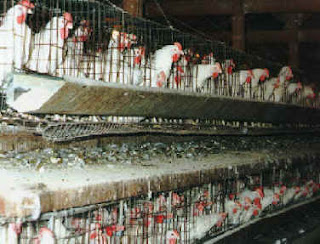
First, on 8th January 2008 the European Commission has upheld the decision made in 1999 by the European Union when it passed the Laying Hens Directive (1999/74/EC) to ban battery cages for hens by 2012 in all its member states. There will be no postponement, the Commission said in a published report.
There had been fears that the date of 2012 could be delayed, due to pressures from egg industry lobbies in many EU countries that continued for many years. The International Egg Commission had previously issued statements saying that the EU Laying Hens Directive sent a ripple around the world, with the global battery cage industry fearing a domino effect in other countries like the USA, Canada and Australia.
18 million is the number of hens still kept in battery cages a year in the UK, and over 200 million each year in the EU.
The European Commission’s report in January concluded that the cost of switching to cage-free eggs could be less than one cent of a euro per egg, but the higher welfare standards could give EU producers a commercial advantage over non-EU competitors.
“There is clearly a growing market for animal welfare friendly products,” states the report. “Recent Eurobarometer surveys on consumer attitudes to animal welfare revealed that the majority of respondents would be willing to pay more for eggs sourced through animal welfare friendly production systems.”
Explaining the reasons for the decision to uphold the ban, EU Commissioner for Health Mr Markos Kyprianou said: “The commission listened to the demands of EU consumers and has taken concrete action to improve the welfare of laying hens”.
And this brings us to the second good news item which highlights the power of the media when they get involved in animal issues.

In the UK there has been a massive change in consumers habits following TV programs and newspaper coverage of poultry factory farming.
In January 2008 Channel 4, a major British TV network, broadcast a series of food programmes with celebrity chefs Hugh Fearnley-Whittingstall and Jamie Oliver launching a high-profile campaign to show the general public what battery cages and broiler sheds mean for the animals. At the same time the RSPCA (Royal Society for the Prevention of Cruelty to Animals) placed advertisements in national newspapers to create what appeared a coordinated campaign. The Independent, a major UK national newspaper, published secret footage from an intensive farm exposing the cruelty inflicted on broiler chickens.
The effects of this have been huge, and perhaps unpredicted.
Sales of free-range poultry shot up by 35 per cent in January 2008 compared with January 2007, while sales of factory-farmed chickens slumped by 7 per cent, according to a survey by the market research company TNS. The trend has continued throughout February as well.
Supermarkets shelves have been emptied of free-range birds, causing complaints from frustrated shoppers eager to embrace the movement away from factory farming.
The increase in free-range chickens sales would have been even higher if producers had been able to keep up with the demand.
“But the new national sales data suggests that shoppers' priorities have shifted dramatically. If the TNS data was extrapolated to the rest of the UK, it suggests sales of factory-farmed chickens dipped by 10 million, while shoppers bought 4.4 million more free-range chickens. Overall, chicken sales were down by 4.8 per cent, perhaps because many people, when faced with an absence of free-range chicken, simply bought no chicken” writes The Independent.
Sainsbury's supermarket poultry department agreed with the picture of roaring free-range sales: "Sales are up 50 per cent year on year so it means we are selling more free-range than we have ever sold. It's also fair to say sales would have been much greater if we had stock to meet demand."
At the same time, several major British supermarket chains, Sainsbury's, Morrison, Co-op, Marks & Spencer and Waitrose, will stop selling battery eggs or have already done so. Something similar is happening with the sale of intensively-reared broiler chickens. Within just two years, UK supermarkets could be selling only eggs laid by barn, free-range and organic free-range hens. The Co-op has also set a target of 2010 for being cage-free on all egg ingredients of all its own label products.
Hellmann's UK has made a groundbreaking decision to become free-range on all its mayonnaise by June 2008. A company representative had been questioned on its use of battery eggs during one of the Channel 4 programs on factory farming.
The tidal change in consumers demand has made front page news.
Chef Hugh Fearnley-Whittingstall, who hosted some of the anti-factory-farming shows, intends to make a new television programme on chickens later this year. He said: "I am delighted we have helped create this change and I am delighted that, two months after the show, there appears to be no letting up.”

EU confirms 2012 ban on battery cages
First, on 8th January 2008 the European Commission has upheld the decision made in 1999 by the European Union when it passed the Laying Hens Directive (1999/74/EC) to ban battery cages for hens by 2012 in all its member states. There will be no postponement, the Commission said in a published report.
There had been fears that the date of 2012 could be delayed, due to pressures from egg industry lobbies in many EU countries that continued for many years. The International Egg Commission had previously issued statements saying that the EU Laying Hens Directive sent a ripple around the world, with the global battery cage industry fearing a domino effect in other countries like the USA, Canada and Australia.
18 million is the number of hens still kept in battery cages a year in the UK, and over 200 million each year in the EU.
The European Commission’s report in January concluded that the cost of switching to cage-free eggs could be less than one cent of a euro per egg, but the higher welfare standards could give EU producers a commercial advantage over non-EU competitors.
“There is clearly a growing market for animal welfare friendly products,” states the report. “Recent Eurobarometer surveys on consumer attitudes to animal welfare revealed that the majority of respondents would be willing to pay more for eggs sourced through animal welfare friendly production systems.”
Explaining the reasons for the decision to uphold the ban, EU Commissioner for Health Mr Markos Kyprianou said: “The commission listened to the demands of EU consumers and has taken concrete action to improve the welfare of laying hens”.
And this brings us to the second good news item which highlights the power of the media when they get involved in animal issues.

UK consumers switch to free-range due to media coverage of factory farms cruelty
In the UK there has been a massive change in consumers habits following TV programs and newspaper coverage of poultry factory farming.
In January 2008 Channel 4, a major British TV network, broadcast a series of food programmes with celebrity chefs Hugh Fearnley-Whittingstall and Jamie Oliver launching a high-profile campaign to show the general public what battery cages and broiler sheds mean for the animals. At the same time the RSPCA (Royal Society for the Prevention of Cruelty to Animals) placed advertisements in national newspapers to create what appeared a coordinated campaign. The Independent, a major UK national newspaper, published secret footage from an intensive farm exposing the cruelty inflicted on broiler chickens.
The effects of this have been huge, and perhaps unpredicted.
Sales of free-range poultry shot up by 35 per cent in January 2008 compared with January 2007, while sales of factory-farmed chickens slumped by 7 per cent, according to a survey by the market research company TNS. The trend has continued throughout February as well.
Supermarkets shelves have been emptied of free-range birds, causing complaints from frustrated shoppers eager to embrace the movement away from factory farming.
The increase in free-range chickens sales would have been even higher if producers had been able to keep up with the demand.
“But the new national sales data suggests that shoppers' priorities have shifted dramatically. If the TNS data was extrapolated to the rest of the UK, it suggests sales of factory-farmed chickens dipped by 10 million, while shoppers bought 4.4 million more free-range chickens. Overall, chicken sales were down by 4.8 per cent, perhaps because many people, when faced with an absence of free-range chicken, simply bought no chicken” writes The Independent.
Sainsbury's supermarket poultry department agreed with the picture of roaring free-range sales: "Sales are up 50 per cent year on year so it means we are selling more free-range than we have ever sold. It's also fair to say sales would have been much greater if we had stock to meet demand."
At the same time, several major British supermarket chains, Sainsbury's, Morrison, Co-op, Marks & Spencer and Waitrose, will stop selling battery eggs or have already done so. Something similar is happening with the sale of intensively-reared broiler chickens. Within just two years, UK supermarkets could be selling only eggs laid by barn, free-range and organic free-range hens. The Co-op has also set a target of 2010 for being cage-free on all egg ingredients of all its own label products.
Hellmann's UK has made a groundbreaking decision to become free-range on all its mayonnaise by June 2008. A company representative had been questioned on its use of battery eggs during one of the Channel 4 programs on factory farming.
The tidal change in consumers demand has made front page news.
Chef Hugh Fearnley-Whittingstall, who hosted some of the anti-factory-farming shows, intends to make a new television programme on chickens later this year. He said: "I am delighted we have helped create this change and I am delighted that, two months after the show, there appears to be no letting up.”
Monday, November 19, 2007
Growth in animal farming increases disease risks for humans, says FAO
 The Food and Agriculture Organization of the United Nations (FAO) has issued a serious warning against animal farming, especially intensive animal farming, for its risks to human health in a report entitled Industrial Livestock Production and Global Health Risks, published in September 2007 .
“The risk of disease transmission from animals to humans will increase in the future due to human and livestock population growth, dynamic changes in livestock production, the emergence of worldwide agro-food networks and a significant increase in the mobility of people and goods,” writes FAO in this policy brief [emphasis added].
Excessive concentration of animals in large scale industrial production units should be avoided, said Joachim Otte, FAO livestock policy expert.
The FAO stresses the reality of the enormous growth in both demand for meat and industrial animal rearing in recent years due to their expansion in Third World countries. In Asia, South America and parts of Africa, traditional animal farming methods are being replaced by intensive ones.
“These developments have potentially serious consequences for local and global disease risks, which, so far, have not been widely recognized by policy makers,” observed Joseph Domenech, FAO Chief Veterinary Officer.
Internationally, pig and poultry productions are the fastest growing and industrializing of all animal farming sectors, and industrial pig and poultry productions depend on a great movement of live animals. The movement of animals and the concentration of a high number of confined animals increases the likelihood of transfer of pathogens (disease-causing agents). In addition, confined animal houses produce a lot of waste, which may contain great quantities of pathogens and is disposed of on land without treatment, posing an infection risk for wild mammals and birds.
The highly pathogenic H5N1 virus is now a major international concern, but the ‘silent’ circulation of influenza A viruses (IAVs) in poultry and pigs should also be closely monitored globally, said FAO. Some IAVs are now widespread in commercial poultry and pigs and could lead to the emergence of a human influenza pandemic.
Although generally speaking this is in no way earth-shattering news in the sense that it’s what the animal rights movement has been saying for decades, it’s interesting to note that the body responsible for issuing these warnings is now a United Nations organization, with no concern for animal equality but purely for human health.
Thursday, November 1, 2007
Eating bacon and sausages every day increases cancer risk by 20%, new authoritative report says
A comprehensive, authoritative, 517-page new study published this Wednesday by the World Cancer Research Fund and the American Institute for Cancer Research points to three major lifestyle factors contributing to a much greater danger of contracting cancer: obesity, alcohol and not least red meat, especially processed or cured meats.
The cancer risk from processed meats is now considered to be comparable to that from smoking as a long recognised risk for lung cancer.
Eating 50 grams of cured meat a day increases the risk of colorectal (bowel) cancer by 21%. Compare that to tobacco: smoking 20 cigarettes every day increases the risk of lung cancer 20 to 40 fold.
The study simply recommends to avoid all processed meats like bacon, ham, sausages, salami and similar meats. For them there is no safe level of consumption, says Martin Wiseman, project director of the report.
This report represents the most comprehensive review of the evidence on the subject, and is considered a landmark. It is the result of five years of work by nine teams of 21 scientists who are world experts on cancer, who reviewed 7,000 studies on diet, weight, exercise, and their links to cancer.
Several types of food carry a risk of tumour, but nothing is as dangerous as cured or processed meat, because the bad effect of red meat is enhanced by the curing process. Bacon, ham, sausages, salami are particularly harmful.
It’s nothing fundamentally new. In fact the conclusions of the study are in harmony with the dietary recommendations of the World Health Organization, medical bodies, health experts, governments health departments: eat lots of fruits, vegetables and whole grains and reduce or avoid red meats, dairy products and fats if you wish to protect yourself against heart disease, diabetes and cancer.
But it’s something that most people still do not know well enough.
The American Institute for Cancer Research also published a survey of 1,000 American adults showing that the majority do not understand these risks. 71 per cent of the people interviewed still incorrectly think that pesticides are a major cancer risk, whereas in fact they are not even remotely the biggest culprit, given the infinitesimal amount in which they are normally ingested by human consumers. There is no evidence that pesticides are a risk factor in cancer.
But the “nice” foods that the general population of the West has grown up believing to be good for them are actually the worst killers, comparable to tobacco.
Of the people polled in the survey, just 38 per cent was aware of the link between cured meats and cancer, and only 49 per cent knew that diets poor in fruits and vegetables increased the risk of cancer.
"Americans are increasingly likely to attribute cancer to factors over which they have no control, and for which no proven links to the disease exist," the survey concludes. "This reflects an 'everything causes cancer' mindset".
It’s easy to see why: it’s harder to take control over one’s life, and make difficult choices and changes. This despite the fact that lifestyle causes of cancer are actually good news, because they mean that we can influence our future at least to a certain extent.
"We need to think about cancer as the product of many long term influences, not as something that 'just happens,'" said Dr Walter Willett, a nutrition expert at the Harvard School of Public Health in Massachusetts.
Incidentally, the new study on nutrition advises to avoid dietary supplements, which could represent a problem for vegans.
Wednesday, December 13, 2006
Meat workers health problems
Meat is not just bad for the animals slaughtered, of course, and for the humans who consume it. It’s bad for the humans who work in the meat industry too.
Few people realize that, in a country like the USA, meatpacking is the most dangerous occupation.
In the year 2000, about 25 percent of all employees of American meatpacking plants had non-fatal occupational injuries or job-related illnesses: that is as many as 4 times the national average for all private industry sectors.
In addition, serious injuries and illnesses (measured by lost workdays) in the meatpacking sector are almost 5 times the national average in all private industry sectors (14.3 percent versus 3 percent).
The frequency of disorders associated with repeated traumas, mainly back problems and tendinitis, is an astonishing 30 times higher than the private-industry national average. This is the effect produced by the working pace of some modern slaughterhouses, which “process” as many as 400 cattle per hour, and in which some workers make up to 10,000 repetitive knife cuts every day.
So much for the idea that man is a “natural” meat-eater. Meat seems to be associated with diseases and unnatural lifestyles wherever it occurs.
Wednesday, December 6, 2006
Vegetarian dogs
Can dogs be vegetarian? Judging from the fact that in England more than 50,000 best man's friends are fed on the vegan product Happidog Supermeal, the answer should be 'yes'. Among them, are many dogs of celebrities.
Everyone knows that Paul and the late Linda McCartney's dogs were vegetarian. And what about the pop singer Howard Jones, who says: "I spoke to my vet before I put my dog Benny on a non-meat diet and we worked out his meals together. Benny was seven then, and he's certainly as fit as any other dog".
Script-writer Carla Lane, who dreamed up British TV's The Liver Birds, Solo, Butterflies and Bread, is another case. A vegetarian for 40 years, she said: "I've always had vegetarian wolfhounds. My previous wolfhound Egor lived on a vegetarian diet from the age of five onwards. The vet advised the diet after he had a haemorrhage and a stomach complaint. "Wolfhounds normally live for six to nine years, but Egor lived a very long and full life and was healthy right to the end. His eyesight and teeth were perfect. For two years he lived with a rather racy heartbeat, which is all the more reason why it was exceptional that he should have lasted. He loved being a vegetarian dog. He never showed any interest in bones at all".
Not everyone agrees, though. Desmond Morris, the animal behaviour expert, is opposed: "It's not only wrong; it's cruel and stupid too. Dogs are natural carnivores, and to deny them meat and substitute vegetables means that they lack a vital part of their diet". His opinion is shared by many.
Yet, to base the argument purely on the concept of "carnivore", both in the sense of belonging to this order of mammals and of meat eater, does not help because this concept, taken as an absolute barrier beyond which it's impossible to go, does not mean much. The Encyclopaedia Britannica, for example, explains: "Although the word "carnivores" means meat eaters, the diet of these animals ranges from an exclusively meat-eating one to an almost totally vegetarian one. Some Ursidae (bears), Procyonidae (racoons) and Canidae (dogs) depend very much on vegetation, and the giant panda lives almost entirely on bamboo sprouts". For jackals, close relatives of our Fidos, fruits form an important part of their diet; coyotes, wolves and foxes consume great amounts of fruits and berries even in times of the year when it's not difficult to find something to eat, which indicates a genuine predilection for these foods.
The idea that domestic dogs are perfectly healthy on a vegetarian diet is now, anyway, the most commonly accepted by vets and pet experts. The RSPCA is fully in favour. Its chief veterinary officer agrees that it is quite possible to feed a dog on a vegetarian diet: "However, you do have to be careful to get the right balance of protein, vitamins and minerals. If you are proposing to turn a dog from a meat and biscuit diet to a vegetarian one, it is best to consult your own vet and to introduce the change gradually".
Neil Wolff, American vet and Chairman of the Association of Veterinarians for Animal Rights, says: "Dogs and cats on vegetarian (or close to vegetarian) diets often do better in terms of coat condition, kidneys, liver and heart. With geriatric animals we often supplement with additional vitamins, amino acids, anti-oxidants or herbs".
The UK Vegetarian Society has received so many requests of advice on dogs' menus, that it has published an information sheet on the subject. A typical day should be divided into two meals: breakfast (morning or midday) and dinner (afternoon or evening). For breakfast, dogs should be given wholegrain cereals (for example muesli) with milk, adding, if necessary and according to taste, honey or dried powdered yeast. For dinner, pulses like baked beans or cooked lentils, or textured vegetable protein, or nutmeat, or else, for lacto-vegetarians, eggs or cheese, adding to the whole lot raw or cooked vegetables. The guidelines remind owners that dogs need some hard foods to chew to exercise their gums and jaws: suitable for this purpose are raw whole carrots, cabbage stumps and apples, and hard wholemeal dog biscuits.
Dr. Alan Long, of the Vegetarian Society, warns: "You must know your dog and what he likes to eat and follow his liking. A dog does not have a vast stomach area for fibrous foods, so watch he doesn't get fat. Try him with vegetables, wholewheat bread or toast, and make sure he has oil in his diet for a shiny coat and keep him fit by giving him lots of walks. "It's easier to start a puppy off. At eight weeks old introduce sloppy baby foods, cereals, gruel and mixed savouries. You can then introduce eggs, milk and cheese, remembering a puppy needs more food in proportion to its weight than a dog".
There are cases in which a vegetarian diet is recommended by the vets themselves. Skin allergies and digestive problems are often caused by meat. The ingredients used in the preparation of some dog foods are slaughterhouse by-products unsuitable for human consumption, such as diseased or damaged parts of the slaughtered animal, chicken feathers, horse hair and other refuse. Recent research has shown that the consumption of great quantities of these impurities contribute to gastro-intestinal and allergic diseases. Some skin disorders, such as itch and loss of hair, have been effectively cured simply by improving the animal's nutrition. The American product Nature's Recipe, for instance, has been formulated just for dogs with skin disorders. It contains soya flour, rice flour, potatoes, carrots, salt, spices, with a number of vitamins and minerals added.
Monday, October 2, 2006
RSPCA Freedom Food under scrutiny
Apparently the RSPCA (for non-Brits: it is the UK’s main animal welfare organization and one of the oldest in the world) is under scrutiny for its Freedom Food campaign.
The animal protection charity has just published a report to coincide with its Freedom Food's Farm Animal Week (25 Sept - 1 Oct). Entitled Everyone's a winner, the 30-page document describes the terrible conditions in which chickens reared for their meat (broilers) are kept on intensive farms.
It then compares the Assured Chicken Production (ACP) standard (Red Tractor logo), the chicken industry’s own assurance scheme, covering over 90% of UK chicken producers, providing a “baseline”, the minimum requirements that allow factory farming of poultry to go unchallenged, with the RSPCA Freedom Food scheme.
It goes on to say that the the RSPCA standard is better not only for the welfare of chickens, but also for the consumers and the producers and retailers, hence the title of the report.
The problem is that farms that had been certified by Freedom Food have been found in the past guilty of neglecting their animals, and have been the subject of BBC Watchdog investigations. Animal rights campaigners say Freedom Food is still large-scale industrial farming with terrifying consequences for animals.
In fact, organic (certified by the Soil Association) and free-range broilers have a better life than Freedom Food birds, but these are reared in better conditions than is the norm for the industry and its own ACP standard.
Tuesday, September 26, 2006
This week's Observer article on broiler chickens
This week The Observer's supplement Food Monthly Magazine carries a good article on the conditions in which broiler chickens are reared and the RSPCA's Freedom Food scheme.
Of course it is not going far enough because it is not promoting a vegetarian diet, but it is good for a wide-circulation Sunday paper to devote space to the welfare of farm animals. I usually don't like The Observer, but in this case I have to say: well done.
Of course it is not going far enough because it is not promoting a vegetarian diet, but it is good for a wide-circulation Sunday paper to devote space to the welfare of farm animals. I usually don't like The Observer, but in this case I have to say: well done.
Friday, June 16, 2006
Health benefits of vegetarian diet

There are many reasons to be vegetarian purely to improve your health and to diminish the risk of contracting the diseases that kill most people in the Western world.
Research shows that in many ways a vegetarian diet is healthier than that of a typical meat-eater.
The vegetarian diet falls closely into line with the recommendations issued in two UK government-commissioned reports by the National Committee on Medical Aspects of Food Policy.
And, for food poisoning and diseases spread from farm animals, should vegetarians be concerned about BSE? As far as we know, there are no cases of cow pus, blood or prions being observed in rice, oat or soya milk.
So, I've collected here some authoritative sources on the subject.
* British Medical Association: "A vegetarian diet confers a wide range of health benefits. Research has proven that vegetarians suffer less from many of the diseases linked to a modern Western diet: obesity, coronary heart disease, hypertension, type II diabetes, diet-related cancers, diverticular disease, constipation and gall stones."
* The American Dietetic Association: "Scientific data suggest positive relationships between a vegetarian diet and reduced risk for several chronic degenerative diseases and conditions, including obesity, coronary artery disease, hypertension, diabetes mellitus, and some types of cancer. Vegetarian diets, like all diets, need to be planned appropriately to be nutritionally adequate.
"POSITION STATEMENT
"It is the position of The American Dietetic Association (ADA) that appropriately planned vegetarian diets are healthful, are nutritionally adequate, and provide health benefits in the prevention and treatment of certain diseases."
* A major report by the World Cancer Research Fund in association with the American Institute for Cancer Research published in 1997 provides the most comprehensive world-wide review of diet and cancer research, presenting dietary guidelines for prevention, public policy recommendations and a thorough review of the scientific evidence.
Here are the report's main findings:
- High intakes of animal protein might increase the risk of a number of colorectal, breast and endometrial cancers
- An increase in animal fat consumption may increase the risk of lung, colon, rectum, breast, endometrium and prostate cancers
- Diets high in milk and dairy products may increase the risk of prostate and kidney cancer
- Protein of plant origin from cereals and pulses is as good as protein of animal origin
- The typical Western-style diet was condemned with these words: "...within the last 50 years, the trend has been to invest in the very resource-intensive rearing of animals. The consumption of fatty meats and of meat, milk and other dairy products has also been promoted with the incorrect message that such foods are especially healthy. Increasing consumption of meat and fatty foods will lead to a massive increase in incidence of a large number of diseases that are expensive to treat. It reflects the impact of widespread perceptions of a cultural link between affluence and Western lifestyles. Traditional diets, when adequate and varied, are likely to be generally more healthy."
From "Food, Nutrition and the Prevention of Cancer: a global perspective". World Cancer Research Fund, 105 Park St, London W1Y 3FB. Tel: +44 (0)20 7343 4200. American Institute for Cancer Research, 1759 R St NW, Washington, DC 20009. Tel 001 709 329 7744. Fax 001 202 328 7226
* From Encyclopædia Britannica:
"Medical and nutrition professionals around the world continued to examine the health benefits of low-fat, high-fibre diets. One style of eating that was receiving a major share of attention was the diet of the Mediterranean region, where the population had traditionally enjoyed low rates of heart disease and some cancers. In 1994 an international group of experts interested in traditional eating patterns developed the Mediterranean diet pyramid as a model for healthful eating. The Mediterranean pyramid called for a largely plant-based diet. Cheese, yogurt, and olive oil were included with fruits, vegetables, and grains as foods that could be eaten daily, while red meat was to be consumed only a few times a month... Meanwhile, in France investigators from the Lyon Heart Study demonstrated that a Mediterranean-style diet was effective in reducing the risk of further heart problems in individuals who had already experienced a heart attack. Some 300 patients were encouraged to increase their consumption of grains, fruits, and vegetables and to eat less red meat and more poultry. The butter in their diet was replaced by a spread rich in alpha-linolenic acid, which some experts believed to have cardioprotective effects. During a follow-up, which averaged 27 months, there were three coronary deaths and five nonfatal heart attacks among those on the diet, compared with corresponding figures of 16 and 17 in a similar group that received no dietary advice.
"The health benefits of a vegetarian diet were substantiated by the results of a 12-year survey conducted by nutritionists in London and Oxford, England. Comparing the fates of more than 5,000 British meat eaters with those of some 6,000 who were not meat eaters, the investigators reported a 40% lower rate of death from cancer among the vegetarians. Those who did not eat meat also had a markedly lower rate of atherosclerotic heart disease, though this was at least partly attributable to their much larger proportion of nonsmokers."
* From Baby and Child Care (1998 edition) by Benjamin Spock, M.D., considered the greatest authority on baby and child care:
“If a mother drinks cow’s milk, which I do not recommend, some of the cow’s proteins will actually pass into the breast milk and actually irritate the baby’s stomach. … The nursing mother’s daily diet should include the following nutrients: (1) plenty of vegetables, (2) fresh fruit, (3) beans, peas, and lentils, and (4) whole grains. Another good reason to get your nutrition from plant sources is that animals tend to concentrate pesticides and other chemicals in their meat and milk. … Traces of these chemicals can easily end up in a mother’s breast milk if she eats these products. Plant foods have much less contamination, even if they are not organically grown.” (pp. 113-114).
* Cornell University's nutritional biochemist Dr. T. Colin Campbell, director of the renowned "China Project" (a long-term study of the relationship between diet and health):
"The vast majority, perhaps 80 percent to 90 percent, of all cancers, cardiovascular diseases, and other forms of degenerative illness can be prevented, at least until very old age, simply by adopting a plant-based diet."
Dr. Campbell has also shown that excess animal protein actually promotes the growth of tumors; and most people on a meat-based diet consume 3 to 10 times more protein than their bodies need.
A vegetarian diet not only helps prevent heart disease, it can also reverse it without drugs and their side effects.
* A study of patients with advanced heart disease was published in the British Lancet, the most prestigious medical journal in the world, in 1990, by Dr. Dean Ornish, S.E. Brown, L.W. Scherwitz, et al., "Can Lifestyle Changes Reverse Coronary Heart Disease?".
Dr. Ornish put a group of patients on a completely vegetarian diet, which was less than 10 percent fat. They were also asked to begin a moderate exercise program, walking a half hour every day, and were taught relaxation techniques. Patients in this group found that their chest pain disappeared and their cholesterol levels dropped at a rate comparable to that of cholesterol-lowering drugs, without the side effects. Because the patients felt so much better, they were motivated to stick with this program. The plaques that had been growing in their hearts for decades actually started to dissolve within one year.
Prostate cancer has been strongly linked to meat consumption. In a study of nearly 48,000 men aged between 40 and 75, those eating red meat five or more times a week were 2.6 times more likely to suffer from prostate cancer than those who ate it once a week or less (Giovannucci, 1993b). Mills (1989b) also noted a link between meat consumption and prostate cancer risk.
Some of the world's leading sporting champions are vegetarian, so veggie food is certainly good for muscles. People who follow a varied, well-balanced vegetarian diet are eating in line with current nutritional recommendations for healthy eating, as most vegetarian meals tend to be low in fat and high in fibre.
Subscribe to:
Posts (Atom)